AI-First Product Builder (AFPB)
Turn product hypotheses into working experiments, without waiting a sprint from the development team for every insight.
Jan 23rd - Feb 20th
For years, figuring out what to build and actually building it were separate capabilities. Product teams researched, prioritized, and specified. Engineering turned those decisions into software.
A PM wrote a ticket and waited for the next sprint. A founder hired a freelancer for every test. A designer validated ideas with screens that could not capture real behavior. A product leader watched discovery slow down because every experiment had to compete with the roadmap.
With coding agents, that boundary is starting to shift. Teams can turn a hypothesis into something a user can actually try, capture signals, and return to the product decision without turning every learning opportunity into a development project first.
Not because this turns everyone into developers, but because it allows someone with strong product judgment to build just enough to learn sooner: a landing page, a functional flow, an automation, a dashboard, a hidden feature, or a pull request ready for review.
This unique program teaches you, week by week, how to use this new building capability as a clear method and incorporate it into your professional product practice. Not to bypass the engineering team, but to enter the conversation with evidence and make better-informed product decisions.
To complete the hands-on exercises in this program, you will need, at a minimum, a Claude Pro subscription (approximately USD 20/month). If you plan to spend significant additional time working on exercises outside of class, you may find it beneficial to temporarily upgrade to Claude Max, although this plan is not a requirement for the program.
In addition to the live sessions, you will need to dedicate an extra 2–3 hours per week to completing exercises.
This program requires prior knowledge of Product Management and/or professional experience working in product roles. If you have any questions about this requirement, please contact us.
What changes when you can build
From idea to experiment: You go from describing what should be built to putting a first version in front of users, leads, or stakeholders.
From mockup to signal: You learn to capture data, feedback, and real behavior—not just opinions about a screen.
From ticket to handoff: You turn a product intention into a concrete change that’s documented, testable, and understandable for whoever reviews it.
From dependency to collaboration: You don’t replace the technical team. You show up better prepared: with context, judgment, clear trade‑offs, and less speculative work to delegate.
After finishing the program you'll be able to close the loop between a product belief, a working experiment, and an evidence‑based decision.
Tools
We will use the following tools




By the end of the program you will be able to
Measure what you want to learn:* Start with what you want to test, decide which signals to track, build a metrics dashboard, and define the threshold that would make you change your mind.
Build prototypes that capture signals: Turn a screen or idea into a landing page, user flow, or dashboard with persistent data.
Work with Claude Code without losing control: Install, configure, plan, execute, and verify the agent’s work before considering it complete.
Build with basic Full-Stack fundamentals: Integrate authentication, databases, forms, and private dashboards without becoming a developer.
Understand where each component lives and what gets exposed: Distinguish what runs in the browser from what runs on a server, know where credentials must never be stored, and recognize which security decisions should never be delegated to an agent.
Deploy and update a product in production: Make it publicly accessible with a separate production database, and move each change into production through a branch, a staging environment, and a review.
Codify your work rituals: Turn your project context and recurring procedures into a manifest, skills, and sub-agents that the agent can reuse.
Navigate an unfamiliar codebase: Understand how a production application is organized, identify where to make changes, and anticipate risks before editing. You’ll practice this on your own app, treating it as if it were someone else’s.
Prepare a change for review: Create a branch, describe the change, request an assisted review using sub-agents, and prepare a clear, easy-to-review pull request (PR) for the technical team.
Curriculum
1 Getting Started with Your Project
Getting Started with Your Project
2 Working with Data
Working with Data
3 Architecture and Security
Architecture and Security
4 Users and Rules
Users and Rules
5 Metrics and Learning
Metrics and Learning
6 Quality and Sub-Agents
Quality and Sub-Agents
7 Deplying
Deplying
8 Working with an existing system
Working with an existing system
Program specs
A Learning Path
16 hours of live instruction, organized into 8 modules and combined with hands-on work between sessions. Depending on the cohort, the program is delivered in either 8 two-hour sessions or 4 four-hour sessions.
Three Progressive Stages
The program follows three stages of increasing complexity: building your own product, measuring its performance and reviewing changes with sound judgment, and deploying and updating it as a live production product.
Expected Outcome
You'll leave with hands-on experience across the entire AI-assisted product building process: from an initial landing page to your own deployed product, complete with metrics and a change taken through a branch and pull request (PR) into production.
Frequently Asked Questions
Everything you need to know about this course
Prior experience managing or building digital products, whether as a PM, PO, product leader, founder, or business owner with your own product. No programming experience is required.
This program requires a willingness to practice. In addition to the live sessions, you should dedicate approximately 2 hours per week to completing exercises, which are just as important as your participation in the live sessions.
You don't need to be able to code like a developer. You do need to be willing to work with technical tools, read plans, review changes, and make decisions. We'll teach you the Git, branching, and pull request (PR) fundamentals you need to work independently.
The AI-First Product Manager (AFPM) covers the entire product management lifecycle, using AI as an assistant. The AI-First Product Builder (AFPB) focuses specifically on turning product decisions into working experiments: prototypes, user flows, automations, and features that can be reviewed.
The two programs complement each other: AFPM develops your product judgment, while AFPB gives you the ability to build what you've decided to pursue.
The Certified AI Product Manager (AIPM) teaches you how to manage products built around AI as their core technology, including models, data, and observability.
The AI-First Product Builder (AFPB) is not focused on managing AI products. It teaches you to build both traditional digital products (landing pages, dashboards, and features) and AI-powered products, using AI as the PM's copilot.
Yes. For founders, the main benefit is being able to test ideas faster without relying on a contractor for every experiment.
You'll build and launch your own product. You'll also practice navigating an unfamiliar codebase and introducing changes through branches and pull requests. This will prepare you for situations where you need to extend your product, review technical work, or collaborate with a developer or contractor.
No. The program aims to help product professionals engage more effectively in technical discussions, bringing evidence, a clearly defined scope, visible trade-offs, and changes that can be reviewed.
In some cases, you'll be able to deploy simple experiments yourself. In others, the best outcome will be a pull request or a plan ready for review by the technical team.
You'll work on functional deliverables, not just conceptual exercises. Your own product will be tailored to your context and deployed online, ready for real users.
In the final part of the program, you'll treat it as an existing product to practice a scenario that more closely reflects day-to-day product work.
Your Instructor
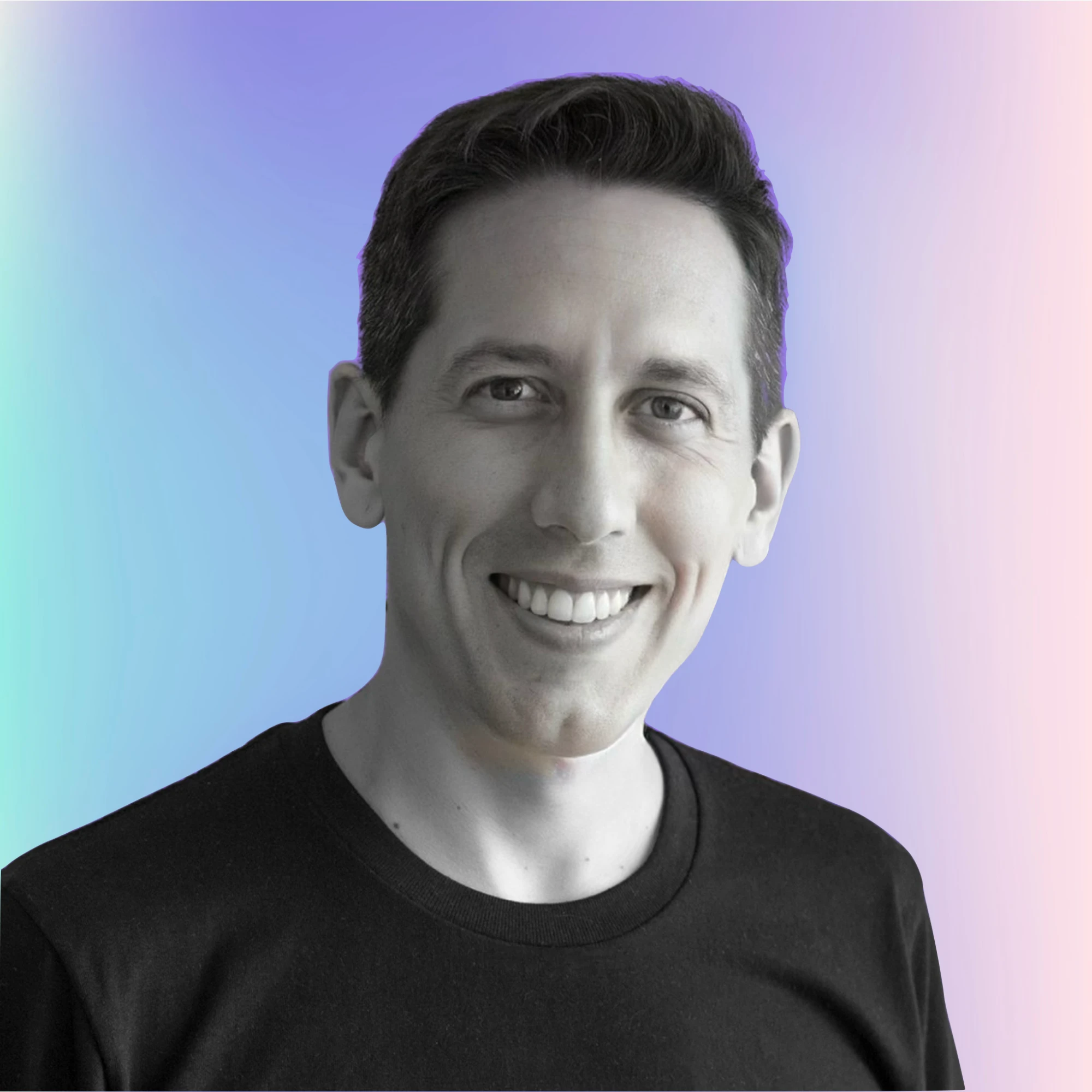
Martin Alaimo
Since 2009, he has worked with more than 200 organizations and supported over 8,000 professionals in their career development journeys.
His approach is situational and hands-on, delivering immersive learning through innovative experiences that enable practical, immediately applicable outcomes—especially in areas often overlooked by traditional academia.
He has spoken at more than 30 conferences across the United States and 14 countries in Latin America and Europe, and is the author of six books on product and digital innovation.
His most recent book, AI Strategy Workshop, provides tools to move beyond the “feature factory” mindset and integrate artificial intelligence with strategic intent and real business impact.
He is the founder of Verica, a platform for running evaluations (Evals) on LLM-based products, designed for organizations that need to measure the quality of the outputs generated by their AI products.
As part of his commitment to innovation, he is an organizing member of Product Tank, the world’s largest Product community.
He is one of the few experts to hold the highest-level certifications in Agile practices: Certified Scrum Trainer (CST), Certified Enterprise Coach (CEC), Certified Team Coach (CTC), Certified Agile Leadership Educator (CAL Educator), and Path to CSP Educator.
Visit his complete professional profile and thought leadership activities on LinkedIn.
Jan 23rd - Feb 20th
Annual Subscription
- 2 live programs for only USD 1295
- Includes on-demand webinar library
- Includes Flash Workshops at no extra cost
- 3rd program onwards: USD 295 each
Ready to step forward?
You're not starting from zero. You're choosing to advance with purpose.
Learning better is also a decision.